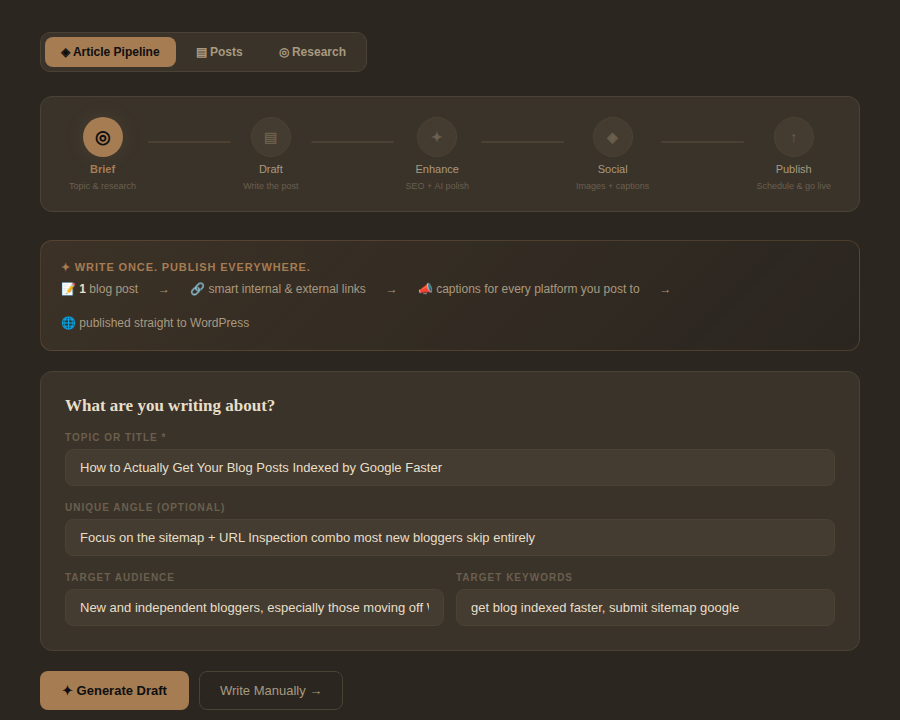
Everything in Blog Bunker runs through one core workflow: the Article Pipeline. A post moves through five stages, in order, without you ever leaving the pipeline to hunt for a different tool. This walks through all five with your actual first post.
Stage 1: Brief
This is where a post starts — a topic, an angle, what you want it to accomplish. If you’re not sure what to write about yet, this is also where the Research tools live:
Competitors (what similar blogs are covering),
Inspiration, and
AI Ideas grounded in your own Brand Guide, not generic suggestions.
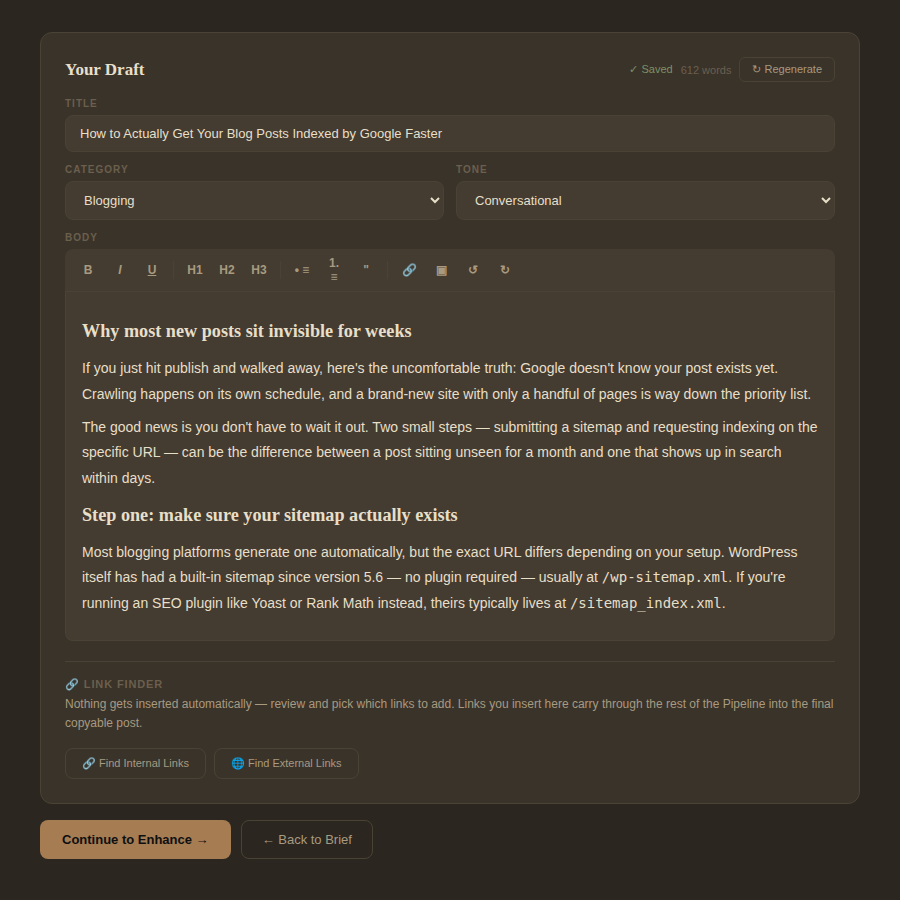
Stage 2: Draft
Once you’ve got a brief, this stage writes the actual post — in the voice and style you set up in your Brand Guide back in Tutorial 01. It’s a starting draft, not a finished one; expect to read it over and adjust things that don’t sound like you yet.
Stage 3: Enhance
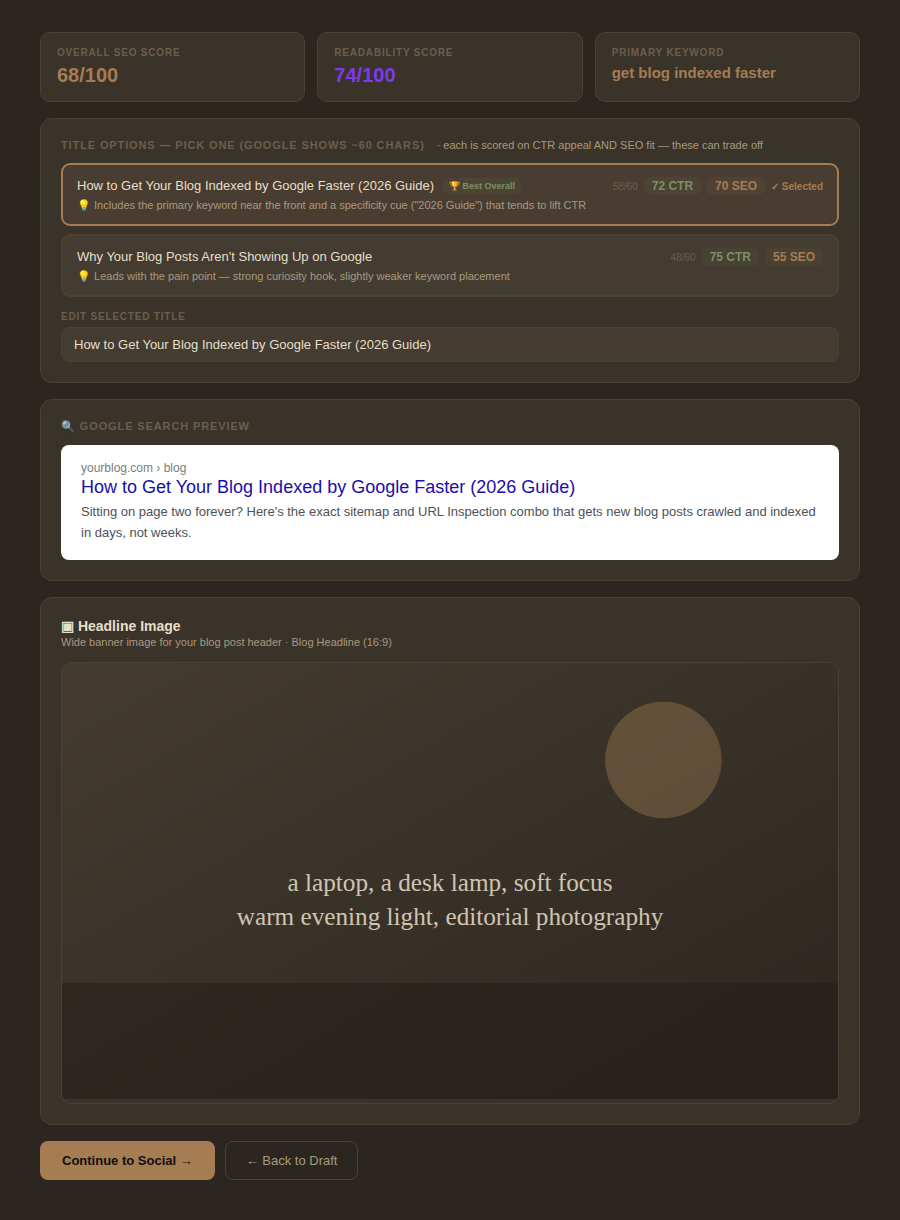
This stage does two things at once: SEO polish (title, structure, keywords) and generates your headline image. You don’t need a separate design tool open — the art gets made right here, as part of finishing the post rather than as a separate errand afterward.
Stage 4: Social
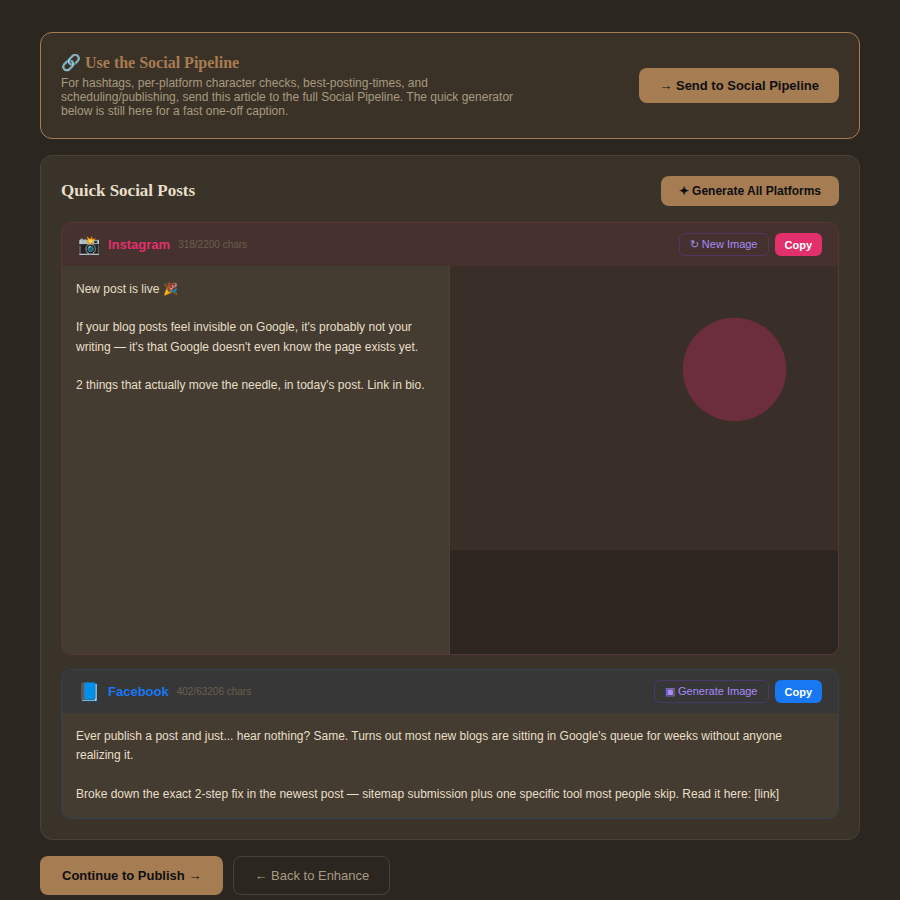
This is where one post becomes several. Blog Bunker drafts channel-specific versions — a caption, a thread, whatever fits your connected platforms — sized to each one’s actual limits, built from the post you just finished rather than starting from scratch.
Stage 5: Publish
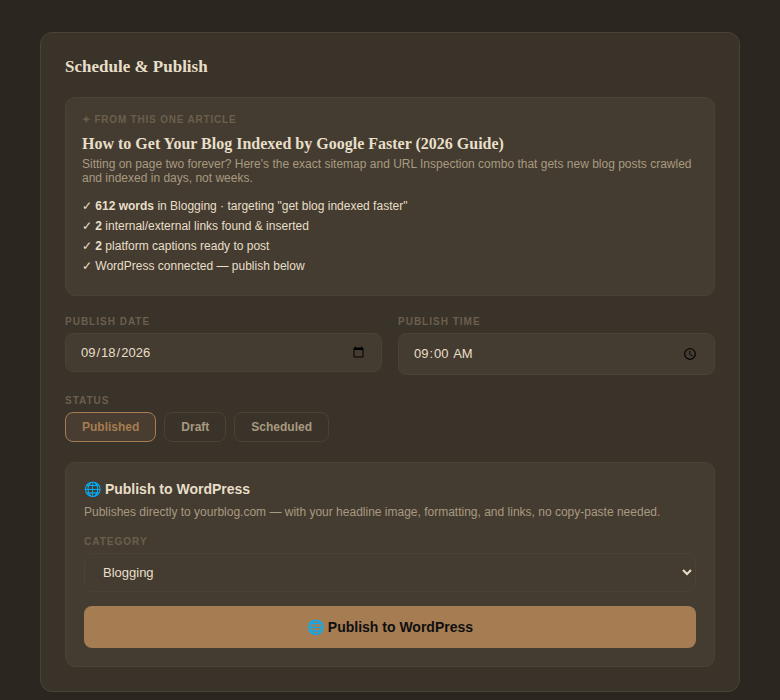
The last stop. Review everything, then publish. If you connected WordPress in Tutorial 01, you’ll see a
🌐 Publish to WordPress button here — click it and the post goes live on your real site. Blog Bunker also remembers which WordPress post it made, so if you edit and republish later, it updates the same post instead of creating a duplicate.
What’s next
Once it’s published, two places pick up automatically: your
Calendar (so you can see it alongside anything scheduled for social) and your
Analytics, where your Blog Health Score starts factoring in what you just shipped.
That’s the whole loop — one idea, one pipeline, five stages, out the door. The next Field Manual entries cover the Social Pipeline, the Media Library, and Research tools in more depth, for when you’re ready to go past the basics.